Football Finals Season 2026
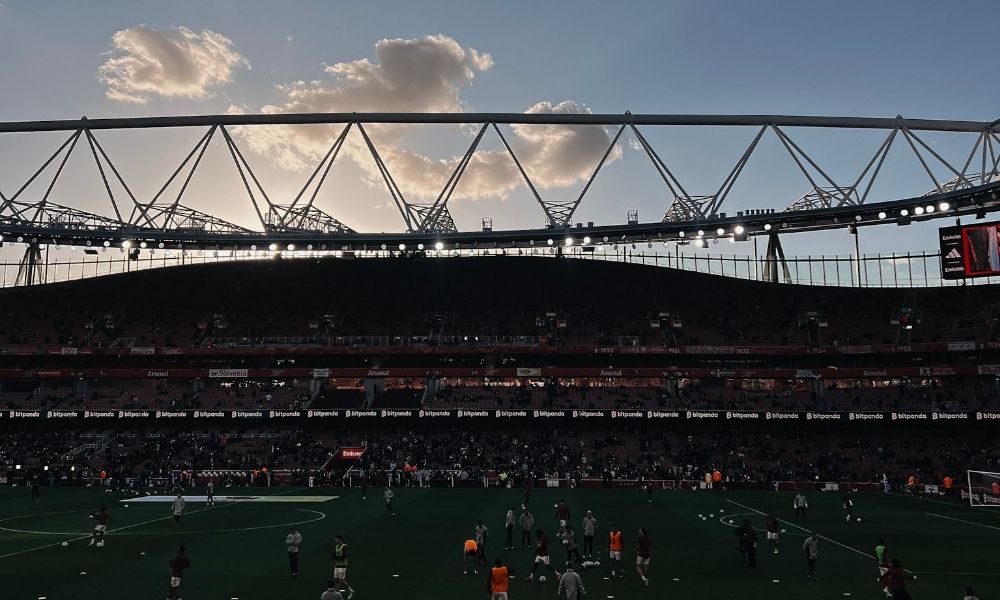
The 2026 season is reaching its most intense stage, with domestic and European football running side by side. On one hand, the FA Cup Final at Wembley is shaping up as a high-pressure showdown between Manchester City and Chelsea. On the other, the UEFA Champions League has reached the semi-final stage, where Europe’s elite are battling for a place in the final in Budapest.
Across both competitions, the same themes dominate; fine margins, tactical identity, and moments of individual brilliance deciding everything.
A Defining Moment in the FA Cup 2026 Football Season
The Final at Wembley
The FA Cup Final 2026 takes place at Wembley Stadium on Saturday 16 May 2026 at 3pm BST, with Chelsea FC facing Manchester City.
Now in its 153rd year, the FA Cup remains the oldest national football competition in the world, first established in 1871/72, and continues to deliver unpredictable, high-pressure finals.
For City, the final represents another opportunity to reinforce their dominance and potentially secure a major piece of silverware in what could become part of a wider trophy haul. For Chelsea, however, the context feels very different. Despite inconsistent league performances, the FA Cup offers a rare opportunity to salvage the season and secure a route into European competition.
Chelsea’s Season: Turbulence and Opportunity
Chelsea arrive at Wembley after a difficult and inconsistent league campaign. Despite that, their cup run has given them another chance at silverware and possibly European qualification.
This is Chelsea’s 6th FA Cup final in the last 10 seasons, but they have only won 1 of their last 5 finals, highlighting both their consistency in reaching finals and their struggles in converting them into trophies.
Much of the team’s direction has also shifted due to managerial changes, with Under-21s coach Calum McFarlane stepping into a key role during a transitional period.
Manchester City: Control, Depth and Expectation
Under Pep Guardiola, Manchester City remain the benchmark in English football. Their dominance is built on structured possession, tactical discipline, and squad depth across all areas of the pitch.
However, fans still point out that FA Cup finals can disrupt even the most dominant sides. City have occasionally shown vulnerability in cup finals, where efficiency in key moments matters more than control of possession. There is also discussion around priorities. With league ambitions still in play, some believe City may not approach the final with absolute intensity, although that remains speculative. Regardless, their squad depth and experience in high-pressure matches make them clear favourites.
Key Players and Match Expectations
At an individual level, Chelsea’s hopes may rely on moments of brilliance. Players like Cole Palmer and João Pedro are seen as capable of producing decisive moments, even if the team overall has lacked consistency. However, some supporters note the absence of a proven, dominant forward figure comparable to past match-winners, which could limit Chelsea’s cutting edge.
City, meanwhile, are expected to rely on structure, control, and depth rather than individual dependence.
What The Office Believe Will Decide It
Inside the office debate, expectations for the FA Cup Final 2026 are split—but everyone agrees on one thing: it will likely be decided by small margins rather than dominance.
Liam, a Chelsea supporter, still leans towards a Manchester City win. He admits it is not purely pessimism. City’s structure, consistency, and control in big matches make them favourites on paper. However, he also points out something important: Chelsea often perform better in the biggest games against elite opposition. Even when form is inconsistent, there is a sense that the team can elevate itself on major occasions, particularly at Wembley.
Alex is more focused on the Chelsea managerial situation, highlighting the influence of Under-21s coach Calum McFarlane stepping into a more prominent role. He questions how much a change in leadership at this stage could affect rhythm, organisation, and in-game decision-making, especially against a team as settled as Manchester City.
Anna, as an Arsenal supporter, openly leans towards the underdog. While she recognises Manchester City as the stronger side, she notes that Arsenal’s biggest modern rivalry is with City in recent title races under Pep Guardiola, with them often seen as the main barrier to silverware. Because of that, she admits many Arsenal fans would slightly prefer a Chelsea win in this specific final. She believes Chelsea’s best chance comes from disrupting expectations rather than matching City’s consistency, and she sees finals as exactly the kind of environment where surprise results can happen.
Jaz takes a more direct view, backing Manchester City. She points to the presence of Erling Haaland as a defining factor, highlighting his physical presence, goal threat, and ability to decide tight games even when chances are limited. In her view, City’s attacking power combined with Haaland’s influence is enough to tilt a close final in their favour.
Across all opinions, the shared conclusion is clear: this is unlikely to be a comfortable match for either side. Whether it comes down to a defensive mistake, a penalty, or a moment of individual brilliance, the expectation is that the final will be decided in moments rather than patterns.
CHAMPIONS LEAGUE 2026: EUROPE’S ELITE ENTER THE FINAL STAGE
Semi-Final Stage Confirmed
The UEFA Champions League 2025–26 has reached the semi-finals, with four teams competing for a place in the final at the Puskás Aréna on 30 May 2026.
The remaining teams are:
- Arsenal
- Paris Saint-Germain
- Bayern Munich
- Atlético Madrid
Arsenal are the only UK club remaining, making them the central focus for English football fans.
The semi-finals are being played across two legs, testing not only quality but also squad depth and tactical flexibility.
Paris Saint-Germain vs Bayern Munich
Atlético Madrid vs Arsenal
These fixtures represent a mix of attacking ambition and defensive discipline. PSG and Bayern offer experience and firepower, while Atlético’s structure contrasts with Arsenal’s more progressive, possession-based approach.
With first-leg matches taking place this week and return legs scheduled in early May, the outcome remains finely balanced. At this level, ties are often decided by small details, individual moments, tactical adjustments, or composure under pressure.
Arsenal: UK’s Last Hope in Europe
Arsenal under Mikel Arteta have built their success on structure, discipline, and rapid defensive transitions. One of their standout strengths is their ability to recover shape immediately after losing possession, limiting opposition counterattacks and reducing high-quality chances conceded.
UEFA analysis highlights their strong collective movement when defending, with multiple players contributing to rapid recovery runs and compact reorganisation.
However, their semi-final against Atlético Madrid presents one of the toughest tactical challenges in Europe. Atlético’s deep, compact defensive structure under Diego Simeone is designed to deny central space and force opponents wide, making chance creation extremely difficult.
PSG vs Bayern Munich: Two Contrasting Football Identities
Bayern Munich: Structured Control
Bayern Munich under Vincent Kompany are defined by:
- Long passing sequences
- Controlled possession phases
- Wide overloads and structured build-up
- High numbers of players entering the box
UEFA analysis shows Bayern frequently sustain long attacking sequences, turning possession into consistent pressure and shot creation.
Paris Saint-Germain: Transition Power
Paris Saint-Germain under Luis Enrique are strongest in attacking transitions. A large share of their knockout goals have come from quick counterattacks rather than structured possession.
Their style is based on:
- Fast forward progression
- Direct attacking movement
- Exploiting space immediately after regaining possession
- High individual attacking speed in transition
This makes them especially dangerous against possession-heavy teams.
Atlético Madrid: Defensive Organisation at Elite Level
Atlético Madrid remain one of Europe’s most structured defensive teams. Simeone’s system is built on:
- Compact defensive blocks
- Minimal risk in possession
- Forcing wide play
- Collective defensive movement
UEFA technical observers note they often defend with five or six players behind the ball, prioritising structure over pressing intensity.
Their approach is not about dominance of possession, but control of space and emotional discipline in high-pressure matches.
Tactical Trends: Why Modern Football Is Decided in Phases
UEFA analysis highlights four key phases that define elite matches:
- Attacking organisation
- Defensive organisation
- Attacking transitions
- Defensive transitions
Arsenal excel in defensive transitions, Bayern dominate structured possession, PSG thrive in attacking transitions, and Atlético specialise in defensive organisation. This creates a perfectly balanced semi-final stage where each team’s strength directly tests another’s identity.
Coaches such as Erik ten Hag and Gaizka Mendieta emphasise that success at this level comes from clarity, adaptability, and knowing when to adjust game plans rather than sticking rigidly to structure.
What’s at Stake in the Champions League
Beyond reaching the final, Champions League success brings:
- Qualification for the 2026/27 Champions League league phase (if not already qualified domestically)
- Entry into the UEFA Super Cup
- Global prestige and financial reward
More importantly, it defines club legacy at the highest level of European football.
A Season Defined by Margins
Both the FA Cup and Champions League are being decided by the smallest details.
In England, Chelsea and Manchester City prepare for a Wembley final defined by pressure and precision. In Europe, Arsenal carry UK hopes against Atlético Madrid while PSG, Bayern and Atlético battle in contrasting tactical systems for a place in Budapest.
Across both competitions, the message is the same: at the elite level, success is not about dominance alone, it is about execution in decisive moments.
Return to DTB Blog